

Introduction
Finding legitimate passive income ideas for beginners is often the first step toward escaping the 9-to-5 grind. I used to think “passive income” was a scam. I pictured shady guys in rented Lamborghinis trying to sell me a course on how to get rich overnight. I ignored the concept entirely, believing that the only way to make money was to trade my time for a paycheck.
Then I wrote a small eBook. It took me two weeks of hard work. I uploaded it to Amazon, forgot about it, and a month later, I received a check for $200. I hadn’t worked a single hour for that money in that month. That $200 felt better than any paycheck I had ever earned. It broke the link between time and money.
However, there is a catch. Passive income is not “no work.” It is “front-loaded work.” You work hard once, and you get paid repeatedly. In this deep-dive guide, I will debunk the myths, warn you about scams, and share 5 proven passive income ideas for beginners that you can start in 2025 with little to no capital.
1. The Reality Check: Active vs. Passive Income
Before we dive into the ideas, we need to define the terms.
-
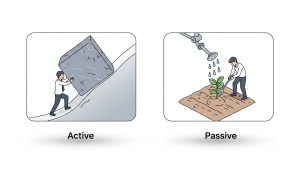
Active Income: You work one hour, you get paid for one hour. If you stop working, the money stops. (e.g., Freelancing, Day Job).
-
Passive Income: You build an asset (digital or physical) that generates cash flow without your daily involvement.
According to Investopedia, the IRS defines passive income specifically as money from rental property or a business in which you do not materially participate. But in the internet age, the definition has expanded.
To succeed with passive income ideas for beginners, you must accept that you will be working for free at the start. You are building a machine. Once the machine is built, it runs on its own. If you need money tomorrow, get a job. If you want money forever, build an asset.
2. Selling Digital Products (The Highest Margin)
This is my favorite method because the profit margin is nearly 100%. Unlike physical products, you never run out of stock, and you don’t have to ship anything.
Ideas:
-
Templates: If you are good at Excel, create a “Budget Tracker” or a “Project Management Dashboard” and sell it on Etsy.
-
E-Books: Write a guide on something you know (e.g., “How to Train a Puppy”). Publish it via Amazon Kindle Direct Publishing (KDP).
-
Presets: If you are a photographer, sell your Lightroom editing filters.
I know a graphic designer who created a “Resume Template” pack five years ago. She still makes $500 a month from it today without touching it. This is one of the most accessible passive income ideas for beginners because it requires $0 to start.
3. Affiliate Marketing (The Connector Model)
If you don’t want to create a product, you can sell someone else’s. This is called Affiliate Marketing. You recommend a product, and if someone buys through your link, you get a commission (usually 5-30%).
How to do it right: Don’t just spam links on Facebook. You need to provide value. Create a blog or a YouTube channel reviewing products you actually use. For example, write an article titled “The Best Laptops for Students.” Include Amazon Associate links. When readers buy the laptop, you get paid.
This model is powerful because you leverage the trust and logistics of giant companies like Amazon or software companies. You are essentially a freelance digital salesperson who works on commission only, but your “sales pitch” (the article) works 24/7.

4. Dividend Stocks and REITs (The Traditional Route)
This is “true” passive income. You literally do nothing but click “buy.”
-
Dividend Stocks: Companies like Coca-Cola or Johnson & Johnson share their profits with investors. If you own their stock, they send you a check every quarter.
-
REITs (Real Estate Investment Trusts): This allows you to invest in real estate without being a landlord. You buy shares of a company that owns malls or apartments, and they pay you 90% of their taxable income as dividends.
According to data from Bankrate, this requires upfront capital. You can’t start with $0. But thanks to apps like Robinhood or Fidelity, you can start with $10. It is a slow snowball, but it is the most reliable of all passive income ideas for beginners.
5. Print on Demand (Creative & Low Risk)
If you have an artistic eye (or just funny jokes), Print on Demand (POD) is a game-changer. In the old days, if you wanted to sell t-shirts, you had to buy 500 shirts, print them, and store them in your garage.
With POD sites like Printful or Redbubble:
-
You upload a design.
-
You list it on a store.
-
When a customer buys a shirt, Printful prints it, ships it, and handles the return.
-
You keep the difference between the sale price and the base cost.
You never touch the product. Your only job is creating designs and driving traffic. It allows you to test 100 ideas without losing a dime on inventory.

6. Renting Out Your Assets (The Airbnb Economy)
You probably have assets sitting around doing nothing.
-
Your Car: Use Turo to rent it out when you aren’t using it.
-
Your Storage: Use Neighbor to rent out your empty garage or attic for people to store boxes.
-
Your Gear: Use Fat Llama to rent out expensive cameras or drones.
This requires a bit more active management (handing over keys), but it monetizes things you already own. It is the fastest way to turn a liability (a car that costs money) into an asset (a car that makes money).
Frequently Asked Questions (FAQs)
Q: How much money do I need to start? A: For digital products, affiliate marketing, and POD, you need $0. For dividends, you need capital to see significant returns (usually thousands). Start with the free methods to fund the investment methods.
Q: Is passive income taxable? A: Yes. In the US and most countries, you must report this income. Dividends are often taxed at a lower rate than wages, while eBook sales are taxed as ordinary income. Always consult a tax professional.
Q: How long does it take to make $1,000/month? A: It varies. With aggressive effort, you could build a digital product funnel in 3-6 months. With dividends, you would need a portfolio of roughly $300,000 (assuming a 4% yield) to make $1,000/month passively.
Q: What are the scams I should avoid? A: Avoid “Multi-Level Marketing” (MLM), “Automated Amazon Stores” that ask for $10k upfront, and anyone promising guaranteed crypto returns. If it sounds too good to be true, it is.
Conclusion
Passive income is not a myth, but it is also not magic. It is simply a shift in how you value your labor. Instead of renting out your time, you invest your time into building assets. Whether you choose to write an eBook, start a blog, or invest in dividends, the best time to start was yesterday. Pick one of these passive income ideas for beginners, stick with it for six months, and watch how your financial life changes.