

Introduction
Learning how to enter flow state is the holy grail of human performance. We have all experienced it at least once. Maybe you were playing a video game, painting, coding, or playing basketball. Suddenly, the world melted away. You lost track of time. Hours felt like minutes. Your inner critic went silent, and every action felt effortless and perfect. You were “in the zone.”
Scientists call this Flow. For decades, we thought this state was reserved for elite athletes or jazz musicians. We thought it was random—a bolt of lightning that struck only when the stars aligned.
We were wrong. Flow is not mystical; it is biological. According to a 10-year study by McKinsey & Company, executives in flow are 500% more productive than when they are not. That means you could do 5 days of work in 1 day if you could harness this state.
In this deep-dive guide, I will deconstruct the neurochemistry of flow, explain the “Challenge-Skill Ratio,” and teach you the specific triggers to learn how to enter flow state on command. If you have struggled with How to Stop Procrastinating, mastering flow is the ultimate antidote.
1. What is Flow? (The Psychology)
The term was coined by the legendary psychologist Mihaly Csikszentmihalyi. He defined it as “a state in which people are so involved in an activity that nothing else seems to matter.”
In this state, your brain processes information faster and deeper. But physically, what is happening? It is a state of Transient Hypofrontality.
-
Transient: Temporary.
-
Hypo: Less.
-
Frontality: Prefrontal Cortex.
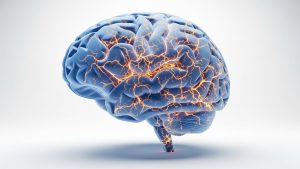
Your Prefrontal Cortex is the part of your brain responsible for logic, planning, and your sense of “self.” During flow, this part actually shuts down. This is why you lose your sense of time and self-consciousness. The voice in your head that says “you’re not good enough” goes silent. This liberation is the first step to understanding how to enter flow state.
2. The 4 Stages of the Flow Cycle
One of the biggest misconceptions is that flow is a switch you can flip instantly. It is not. It is a four-part cycle, identified by flow researcher Steven Kotler.
-
Struggle: This is the loading phase. You are wrestling with the problem. It feels frustrating. Your brain is loading data. Most people quit here, thinking “I’m not in the zone.”
-
Release: You take a step back. You go for a walk, do the dishes, or take a breath. This takes your mind off the problem, allowing the subconscious to take over.
-
Flow: The main event. The release triggers a cocktail of neurochemicals (Dopamine, Norepinephrine, Anandamide). You perform at your peak.
-
Recovery: The comedown. Flow is expensive energetically. You need to rest and recharge before you can do it again. If you skip this, you risk severe exhaustion. (Check out our guide on How to Recover from Burnout to manage this phase).
3. The Goldilocks Zone: Challenge vs. Skill
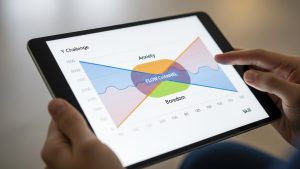
How do you trigger it? The most fundamental trigger is the Challenge-Skill Ratio. Flow happens at the midpoint between boredom and anxiety.
-
If the task is too easy (High Skill, Low Challenge) -> Boredom.
-
If the task is too hard (Low Skill, High Challenge) -> Anxiety.
-
If the task is just right (Skills match the Challenge) -> Flow.
To master how to enter flow state, you need to stretch yourself slightly. The sweet spot is often cited as a challenge that is 4% harder than your current skill level. You need to feel like you might fail, but you probably won’t if you focus.
4. The 3 Environmental Triggers
You can engineer your environment to force flow.
-
High Consequences: Flow was originally studied in extreme sports athletes. If a surfer loses focus, they die. That risk drives focus. In the office, you can simulate this with “social risk” (e.g., promising a boss you will finish by 5 PM).
-
Rich Environment: Novelty, unpredictability, and complexity trigger dopamine. This is why changing your workspace (going to a coffee shop) often helps you focus.
-
Deep Embodiment: Engaging multiple senses. Handwriting notes using the Cornell Method or using a standing desk engages your body, which helps engage your mind.

5. Clear Goals and Immediate Feedback
Flow requires certainty. You need to know exactly what you are doing and how well you are doing it.
-
Clear Goals: “Write an article” is too vague. “Write the introduction and section 1 in the next 20 minutes” is a clear goal. This aligns perfectly with the Time Blocking Method.
-
Immediate Feedback: Video games are addictive because they give you points, sounds, and visual flashes instantly when you do something right.
In work, create your own feedback loops. Use a checklist. Check off items every 15 minutes. Seeing the progress keeps the dopamine flowing and maintains the state.
6. Flow Killers: The Enemy of the Zone
You cannot enter flow if you are constantly interrupted. A study by the University of California, Irvine found that it takes 23 minutes to get back on track after a distraction.
-
Multitasking: It is biologically impossible to flow while multitasking. Flow requires 100% of your attention on one task.
-
Notifications: Even a vibrating phone pulls you out of the zone. You need to implement Digital Detox Tips to secure your attention.
-
Lack of Sleep: Flow requires massive amounts of energy. If you are sleep-deprived, your prefrontal cortex cannot regulate the struggle phase.
To successfully how to enter flow state, you must be ruthless about protecting your attention. For a deeper dive on blocking distractions, read our guide on How to Practice Deep Work.
Frequently Asked Questions (FAQs)
Q: Can everyone achieve flow? A: Yes. Flow is a universal human experience. It is not limited to creatives or athletes. Accountants, cleaners, and programmers can all find flow in their work if the conditions (Challenge/Skill ratio) are right.
Q: Is Flow the same as Hyperfocus? A: They are similar, but Hyperfocus (often associated with ADHD) can sometimes be uncontrollable or directed at the wrong things (like video games instead of work). Flow is usually a more positive, controlled state of peak performance.
Q: Can I stay in flow all day? A: No. As mentioned in the “Recovery” phase, flow drains your neurochemistry. Most humans can only sustain true flow for 2 to 4 hours a day. Trying to force more leads to burnout.
Q: Does music help? A: For many, yes. Familiar, repetitive music (like Techno, Lofi, or Classical) can act as a trigger. Avoid new music with lyrics, as your brain will try to process the words, breaking your focus. Noise-canceling headphones like the Sony WH-1000XM5 can be a great tool here.
Conclusion
Flow is not a magic pill; it is a biological state that you can cultivate. By respecting the struggle, managing the challenge level of your tasks, and eliminating distractions, you can access this state on command. When you learn how to enter flow state, work stops feeling like a chore and starts feeling like a game you are winning.