
Introduction
If you want to learn a new language fast, you first need to forget almost everything you were taught in high school. I spent four years studying French in school. I memorized conjugation tables, I passed written exams, and I could recite the days of the week perfectly. But when I actually went to Paris? I couldn’t order a coffee. I froze. I felt stupid.
For years, I thought I just didn’t have the “language gene.” But then I met a polyglot—someone who spoke seven languages fluently. He told me something that changed my life: “You didn’t fail to learn French because you aren’t smart. You failed because you were studying a language like it was history or math. Language isn’t a subject to be studied; it is a skill to be practiced.”
In this comprehensive guide, I will share the scientifically proven methods used by the world’s fastest language learners. We will ditch the boring grammar textbooks and focus on immersion, the Pareto Principle, and the psychological hacks you need to learn a new language fast and actually speak it with confidence.
1. The “Input Hypothesis”: Why Classes Fail
Most traditional language classes focus on “Output” (speaking and writing) before you are ready. They force you to construct sentences using grammar rules you barely understand. This causes anxiety.
Linguist Stephen Krashen revolutionized language learning with his Input Hypothesis. He argues that we acquire language in only one way: when we understand messages. This is called “Comprehensible Input.”
Think about how a baby learns. They listen for two years before they speak a full sentence. They absorb. To learn a new language fast, you need to flood your brain with content you mostly understand (about 70-80% comprehension).
-
Don’t: Read Shakespeare if you are a beginner.
-
Do: Watch children’s cartoons like “Peppa Pig” in your target language, or listen to “Slow News” podcasts designed for learners.

2. The 80/20 Rule (Pareto Principle) of Vocabulary
The English language has over 170,000 words. If you try to learn them all, you will die of old age before you are fluent. The good news is that you don’t need them all. According to the Pareto Principle, 20% of the effort yields 80% of the results. In linguistics, the top 1,000 most common words account for about 85% of daily conversation.
Don’t waste time learning the word for “aardvark” or “thimble” in your first month. Focus on high-frequency words:
-
Verbs: Go, want, need, have, is.
-
Pronouns: I, you, he, she, it.
-
Connectors: And, but, because, so.
By focusing ruthlessly on these high-frequency words, you can hack the system and learn a new language fast. You will be able to express complex thoughts using simple tools.
3. The “Shadowing” Technique for Pronunciation
Having a great vocabulary is useless if no one understands you. Pronunciation is a physical skill. Your mouth has muscles that need to be trained to make new sounds.
The best way to train these muscles is a technique called Shadowing, popularized by polyglot Alexander Arguelles.
-
Find a podcast or YouTube video with a native speaker (and a transcript).
-
Listen to a sentence.
-
Pause and repeat it immediately.
-
The Advanced Step: Try to speak along with them simultaneously, matching their speed, intonation, and emotion.
This feels weird at first. You will feel like an actor mimicking a role. But that is exactly the point. You are bypassing your analytical brain and building muscle memory.

4. Change Your Digital Environment
You look at your phone roughly 80 times a day. That is 80 opportunities to practice. One of the easiest ways to immerse yourself without buying a plane ticket is to change your digital environment.
-
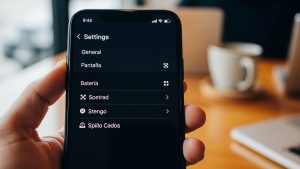
Change your phone’s language setting: Switch it to Spanish, French, or Japanese. You already know where the “Settings” and “Camera” icons are by memory. Now you will learn the words for them automatically.
-
The “Netflix Hack”: Install a browser extension like “Language Reactor.” It allows you to watch Netflix with two sets of subtitles (your native language and your target language) at the same time.
-
Social Media: Follow 10 influencers, meme pages, or news outlets in your target language. When you doom-scroll, you are now learning.
5. Get Over the “Fear of Looking Stupid”
This is the barrier that stops 90% of adults. Children learn languages fast because they don’t care if they make mistakes. Adults are terrified of sounding uneducated.
I call this the “Ego Barrier.” To break it, you need to speak early and often. You don’t need a teacher; you need a conversation partner.
-
iTalki: This platform connects you with affordable tutors for 1-on-1 video calls. You can find community tutors for as low as $5/hour.
-
HelloTalk / Tandem: These are free language exchange apps where you text or voice message with people who want to learn your language.
Make a goal to make 200 mistakes a day. If you aren’t making mistakes, you aren’t pushing the boundaries of your ability. Embrace the awkwardness. It is the growing pain of fluency.
6. Spaced Repetition Systems (SRS)
Forget cramming. Your brain is designed to forget information unless it determines that information is vital for survival. To trick your brain into remembering vocabulary forever, use Spaced Repetition.
This algorithm shows you a flashcard just before you are about to forget it.
-
If you know it well, you won’t see it for 3 days.
-
If you know it perfectly, you won’t see it for 2 weeks.
-
If you forget it, you see it again in 1 minute.
Apps like Anki (the gold standard for serious learners) or Memrise use this. It is infinitely more efficient than reviewing a static list of words every day. Spending 15 minutes on Anki every morning is the mathematical shortcut to learn a new language fast.
Frequently Asked Questions (FAQs)
Q: How long does it really take to become fluent? A: According to the US Foreign Service Institute (FSI), it takes about 600-750 classroom hours to reach proficiency in “easy” languages like Spanish or French for English speakers, and up to 2,200 hours for “hard” languages like Mandarin or Arabic. However, with the immersion methods above, you can cut this time significantly.
Q: Can I learn two languages at the same time? A: You can, but it is generally not recommended for beginners. It splits your focus and slows down progress in both. It is better to reach an intermediate level (B1/B2) in one language before starting another.
Q: Is Duolingo enough to become fluent? A: Honestly? No. Duolingo is great for building a daily habit and learning basics, but it won’t make you fluent. It lacks the “natural conversation” and “long-form listening” required for true mastery. Use it as a supplement, not your main course.
Q: I’m too old to learn a language. Is it true that brains lose plasticity? A: While children have a slight biological advantage in accent acquisition, adults have a massive advantage in discipline, logic, and resources. Thousands of people learn languages in their 40s, 50s, and 60s. The “critical period” hypothesis is often used as an excuse.
Conclusion
Learning a language is a marathon, not a sprint, but you can certainly run faster if you have the right shoes. By focusing on comprehensible input, prioritizing the top 20% of vocabulary, and using technology like Anki and iTalki, you can bypass years of ineffective schooling. Stop studying. Start living in the language. That is the only way to learn a new language fast and unlock a new world of opportunities.