
Introduction
If you want to master negotiation skills, you first need to realize that you are already negotiating every single day. Whether you are deciding where to eat dinner with your spouse, asking for a salary raise, or buying a used car, life is a series of negotiations.
I used to be terrified of conflict. I thought negotiation meant arguing or being aggressive. I remember selling my first freelance project for $500 when the client had a budget of $5,000. I left $4,500 on the table simply because I was afraid to name a price. I accepted their first offer immediately. When I walked out of that meeting, I didn’t feel relieved; I felt exploited.
That moment changed everything. I realized that in business, you don’t get what you deserve; you get what you negotiate.
In this deep-dive guide, I will share the psychological tactics used by FBI hostage negotiators and Harvard professors. We will explore the concept of BATNA, the power of silence, and exactly how to master negotiation skills so you never leave money on the table again.
1. The “Anchoring Effect”: The Power of the First Number
There is a long-standing debate in sales: “Should I make the first offer, or should I wait?” Science gives us a clear answer: Make the first offer.
This utilizes a cognitive bias called the Anchoring Effect. The first number thrown out in a negotiation becomes the “Anchor.” All subsequent numbers are judged relative to that anchor.
-
Scenario: You want to sell a service for $2,000.
-
Strategy: You open with $3,500.
-
Result: The client might negotiate you down to $2,500. They feel like they “won” because they got a discount. You won because you got $500 more than your goal.
If you let them set the anchor at $1,000, you will fight an uphill battle just to get to your baseline. To master negotiation skills, you must have the courage to drop the anchor first and set the reality of the deal.

2. Silence: The Most Uncomfortable Weapon
Most people are terrified of silence. In a negotiation, when we make an offer and the other person says nothing, we panic. We think, “Oh no, they hate it.” So we start talking. “But I can go lower! I can give a discount!” You just negotiated against yourself.
The pros know that silence is a vacuum. Human beings have a deep psychological need to fill that vacuum. The Tactic: State your price, and then shut up. Count to 10 in your head. Look them in the eye calmly. The pressure of the silence will often force the other person to concede or reveal information they didn’t intend to share (e.g., “Well, our budget is actually slightly higher…”).
As we discussed in our article on The Psychology of Selling, confidence signals authority. Silence is the ultimate display of confidence.
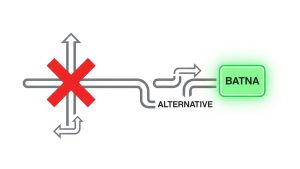
3. Understand Your BATNA (The Safety Net)
You cannot negotiate effectively if you are desperate. The person who is willing to walk away always has the most power. This concept is called BATNA: Best Alternative to a Negotiated Agreement. It was coined by researchers at Harvard.
Before you walk into the room, ask yourself: “If this deal fails, what is my plan B?”
-
If you are negotiating a salary, your BATNA might be “I have another job offer.”
-
If you are buying a car, your BATNA is “There is another dealership across town.”
If you have a strong BATNA, you are fearless. If you have no BATNA (you need this specific deal), you are vulnerable. To master negotiation skills, spend more time improving your BATNA than practicing your pitch.

4. Tactical Empathy and “Labeling”
Hostility kills deals. Collaboration closes them. Chris Voss, a former FBI hostage negotiator and author of Never Split the Difference, advocates for Tactical Empathy. This doesn’t mean agreeing with them; it means making them feel understood.
Use a technique called Labeling. Put a label on their emotions.
-
Instead of saying: “You are wrong.”
-
Say: “It sounds like you are worried that this price is too high for your budget.”
-
Say: “It seems like you are under a lot of pressure to close this quickly.”
When you label their fear, the fear diminishes. They relax. They think, “This person gets me.” This builds the rapport needed to find a solution. (This relates closely to the skills we covered in Emotional Intelligence vs IQ.
5. The “Flinch”: Physical Body Language
Negotiation is 20% words and 80% delivery. One old-school but effective tactic is The Flinch. When the other party names their price or makes a demand, you must react visibly.
-
The Action: Visibly recoil slightly. Look shocked. Pause. Say, “Oh. That’s… a lot higher than I expected.”
Even if the price is fair, “The Flinch” signals that they are pushing your limits. It makes them question their own confidence. If you accept a price with a smile immediately, they will instantly regret not asking for more (this is called “Winner’s Curse”).
6. Never Split the Difference
Meeting in the middle feels fair, but it is often a lazy compromise. If I want to sell for $100 and you want to buy for $50, splitting the difference at $75 usually leaves both sides unhappy. I lost $25, and you paid $25 more than you wanted.
Instead of splitting, trade variables.
-
“I can’t lower the price to $50, but I can throw in an extended warranty worth $40.”
-
“I can’t match that salary, but I can give you an extra week of vacation.”
This expands the pie rather than dividing it. It creates value where there was none.
Frequently Asked Questions (FAQs)
Q: What if they say “Take it or leave it”? A: This is usually a bluff. Ignore the ultimatum and pivot to a “How” question. Ask, “How am I supposed to accept that when it puts my company at a loss?” forcing them to solve your problem.
Q: Can I negotiate via email? A: You can, but face-to-face (or video) is better. Email loses tone, body language, and silence. It is easier to say “No” to an email than to a person. If you must use email, use the “Mirroring” technique we discussed in our How to Ace Your Job Interview guide.
Q: Should I lie about my BATNA? A: No. Ethical negotiation builds long-term relationships. If you lie and say “I have another offer” when you don’t, and they call your bluff, your reputation is destroyed.
Q: Is negotiation different for women? A: Studies show women face more “social backlash” for aggressive negotiation. Experts recommend a “communal” approach: frame your request as good for the team (“If I am paid fairly, I can focus entirely on delivering the best results for the company”).
Conclusion
Negotiation is not a battle; it is a discovery process. It is about uncovering what the other person truly values and finding a way to give it to them on your terms. By using anchors, embracing silence, and preparing your BATNA, you move from a passive observer to an active architect of your own success. Stop accepting the first offer. Start asking for what you are worth. Go out there and master negotiation skills today.