

Introduction
Learning how to overcome decision fatigue is the secret to maintaining high performance without feeling mentally drained by 5 PM. I want to start with a scenario that might feel uncomfortably familiar. You finish a long day at work where you managed complex spreadsheets, led meetings, and solved problems. You drive home, exhausted. Your partner asks a simple question: “What do you want for dinner?”
Suddenly, your brain short-circuits. You cannot answer. You stare at the fridge, or you scroll through Netflix for 45 minutes unable to pick a movie, only to fall asleep before watching anything.
Why does this happen? You aren’t physically tired; you are decision-tired. This phenomenon is called Decision Fatigue. It is the reason why Barack Obama only wore blue or gray suits and why Steve Jobs famously wore the same black turtleneck every day. They understood a biological truth that most of us ignore: Willpower is a limited resource.
In this comprehensive 1200-word deep dive, I will explain the neuroscience of “Ego Depletion,” analyze the famous “Parole Board Study,” and provide you with actionable strategies to overcome decision fatigue so you can save your brainpower for the choices that actually matter.
1. The Science: Your Brain is a Battery, Not a Generator
For a long time, psychologists thought willpower was a skill you could learn, like typing. But pioneering research by Roy Baumeister suggests that willpower is actually more like a battery or a muscle. Every time you make a decision—no matter how small—you deplete that battery.
This concept is called Ego Depletion.
-
Choosing which socks to wear? Depletion.
-
Deciding whether to reply to an email now or later? Depletion.
-
Resisting a donut? Depletion.
By the time you get to the important decisions in the afternoon, your battery is empty. When the brain is low on fuel (glucose and executive function), it defaults to two modes:
-
Recklessness: Impulse buying or eating junk food.
-
Avoidance: Doing nothing (procrastination).
To overcome decision fatigue, you must stop treating your energy as infinite and start treating it like a budget. You only have a certain amount of “decision coins” to spend each day.

2. The Parole Board Study: Why Timing Matters
The most terrifying example of decision fatigue comes from a study of judges. Researchers analyzed 1,100 parole hearings. These judges were experts, sworn to be impartial. The results, published by the National Academy of Sciences (PNAS), were shocking.
-
Early Morning: Prisoners appearing at 9 AM had a 65% chance of getting parole.
-
Late Morning: Prisoners appearing right before lunch had a near 0% chance.
-
After Lunch: The rate jumped back up to 65%.
Why? As the judges got tired and hungry, making the difficult decision to release a prisoner became too mentally expensive. So, they defaulted to the “safe” and easy option: Deny Parole. This proves that your judgment is not consistent throughout the day. To overcome decision fatigue, you must schedule your most critical decisions for the morning, not the late afternoon.
3. The “Steve Jobs” Strategy: Automate the Trivial
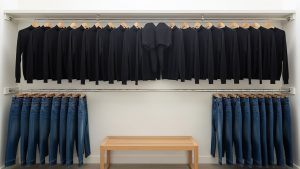
Why do visionaries wear uniforms? It isn’t because they lack fashion sense. It is because they are eliminating variables. Steve Jobs (Apple) wore a black turtleneck. Mark Zuckerberg (Facebook) wears a grey t-shirt. Barack Obama wore only blue or gray suits.
Obama told Vanity Fair: “I don’t want to make decisions about what I’m eating or wearing. Because I have too many other decisions to make.”
Actionable Step: Automate your mundane choices.
-
Wardrobe: Create a “capsule wardrobe” where everything matches everything else.
-
Breakfast: Eat the same thing every Monday through Friday (e.g., oatmeal or eggs).
-
Route: Drive the same way to work.
By removing these 3 low-value choices every morning, you save your “decision coins” for your actual work. This simplification is the fastest way to overcome decision fatigue.
4. Meal Planning: The Biggest Energy Leak
Food is the biggest source of daily decision fatigue. “What’s for lunch?” “Where should we order?” “Is that healthy?” This debate happens three times a day, 21 times a week. It drains massive amounts of mental RAM.
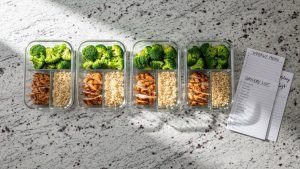
The Fix: Weekly Meal Prep. You don’t have to cook everything on Sunday, but you must decide everything on Sunday. Write a menu for the week. Buy the groceries. When Tuesday night comes, you don’t ask, “What are we eating?” You look at the list: “It’s Taco Tuesday.” You execute the plan rather than creating a plan. This separation of “Planning” vs. “Doing” is a core productivity principle.
5. The Paradox of Choice: Why Less is More
In his book The Paradox of Choice, psychologist Barry Schwartz argues that having too many options makes us miserable. If you go to a store to buy jam and there are 24 flavors, you are likely to buy nothing because the choice is overwhelming. If there are only 6 flavors, you are 10 times more likely to buy.
How to apply this:
-
Limit your inputs: Don’t browse 50 pages of Netflix. Pick 3 movies and choose one.
-
The “Satisficer” Mindset: Stop trying to be a “Maximizer” (someone who needs the absolute best option). Be a “Satisficer” (someone who picks the first option that meets their criteria).
-
The 2-Minute Choice: If a decision (like what toothpaste to buy) has low consequences, give yourself a strict 2-minute timer. If the timer rings, pick the one on the left.
By artificially limiting your options, you reduce the cognitive load required to make a choice, helping you overcome decision fatigue.
6. Implementation Intentions: Deciding in Advance
Willpower fails when you are tired. To bypass this, use “Implementation Intentions” (If-Then planning). You decide the outcome before you are in the situation.
-
Scenario: You know you will be tired after work and tempted to skip the gym.
-
Plan: “If it is 6 PM, then I will immediately put on my running shoes.”
You don’t decide at 6 PM. The decision was made yesterday. You are just a robot executing the command. This removes the “negotiation” phase where your tired brain tries to talk you out of it.
Frequently Asked Questions (FAQs)
Q: Does sugar help with decision fatigue? A: Short term, yes. The brain runs on glucose. Baumeister’s studies showed that giving judges lemonade (sugar) restored their willpower temporarily. However, relying on sugar spikes leads to crashes. Complex carbs and steady nutrition are better for sustained focus.
Q: Is this why I impulse buy at night? A: Exactly. Online retailers send sales emails at 7 PM or 8 PM because they know your defenses are down. You are chemically less capable of resisting a sale at night than you are in the morning.
Q: Can I train myself to have more willpower? A: Yes, to an extent. Willpower is like a muscle; it can be strengthened with practice (like meditation or holding a posture). But even a strong muscle gets tired. Management is more important than strength.
Q: What is the best time for big decisions? A: Between 8 AM and 11 AM (assuming you wake up around 6 or 7). This is when your cortisol is optimized for alertness and your decision battery is full. Never make life-changing decisions after 9 PM.
Conclusion
You cannot add more hours to the day, but you can add more quality to your decisions. By acknowledging that your brain energy is finite, automating the trivial choices (like clothes and food), and respecting your biological rhythms, you can stop feeling mentally paralyzed. The goal isn’t to make perfect decisions every time; it’s to have the energy left to make the decisions that count. Start small: pick your outfit for tomorrow right now. You just took the first step to overcome decision fatigue.